
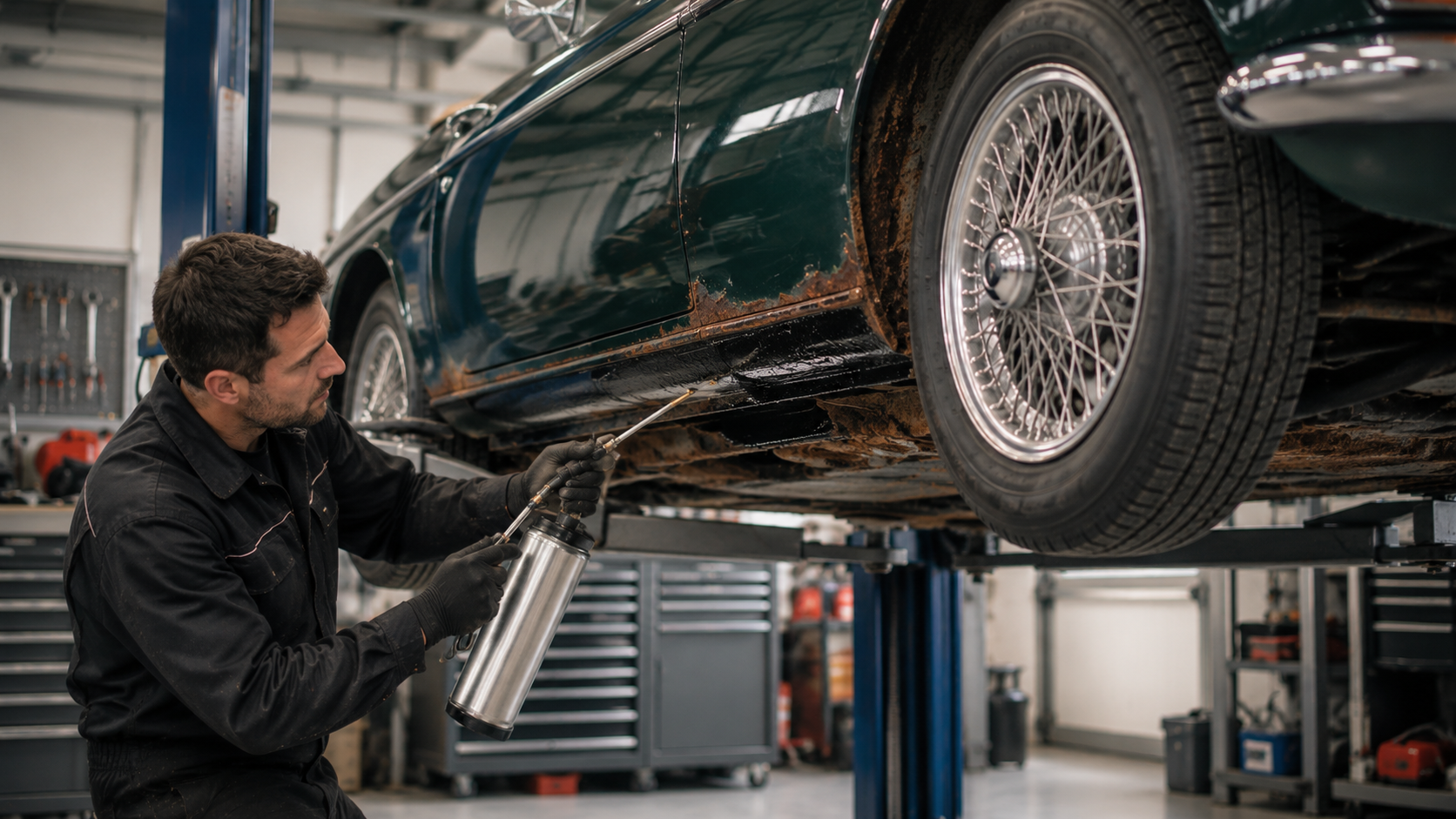
Protect Your Classic Car from Rust: Effective & Affordable Tips
The Most Important Facts at a Glance
- Regular inspections and maintenance are essential to protect a classic car from rust and to detect major corrosion damage at an early stage.
- Areas that are particularly prone to rust include the sills, wheel arches, underbody, lower door edges, seams, welded joints and hard-to-reach cavities.
- Professional cavity protection using wax or grease provides long-term protection against moisture and corrosion in sensitive body areas.
- Small paint chips, stone chips and early signs of rust should be treated as quickly as possible before the corrosion spreads.
- A dry, well-ventilated garage and avoiding driving on salt-covered roads can significantly reduce the risk of rust.
- Preventive rust protection is usually considerably less expensive than extensive welding, bodywork and paint repairs later on.
Protecting a Classic Car from Rust: Effective & Affordable
Rust is one of the greatest enemies of a classic vehicle. If you want to protect your classic car from rust, you should not wait until obvious corrosion damage becomes visible. Prevention is considerably easier and often much more affordable than a later restoration.
Dry storage, regular cleaning, inspections of the paintwork and underbody, as well as suitable cavity protection, provide a solid foundation for long-term corrosion prevention. It is particularly important to treat small rust spots and paint damage at an early stage. The sooner moisture is kept away from exposed metal, the lower the risk of more extensive damage.
With regular care and targeted protective measures, a classic vehicle can therefore be preserved reliably even on a manageable budget and, ideally, remain in good condition for many years to come.
Why Rust Is Particularly Problematic for Classic Cars
Modern vehicles often benefit from galvanized bodywork, optimized coatings and advanced corrosion protection methods. Many classic cars, however, date from a time when rust protection was far less comprehensive.
In addition, older vehicles have been exposed to moisture, temperature fluctuations, road salt and mechanical stress for decades. Even classic cars that appear to be in excellent condition on the outside may therefore suffer from corrosion in areas that are difficult to inspect.
Cavities and areas where water drains only slowly are particularly critical. Corrosion can develop there almost unnoticed for years. Anyone who wants to protect a classic car from rust should therefore take action before larger rust spots become visible.
How Does Rust Develop on a Classic Car?
Put simply, rust develops when iron or steel reacts with oxygen and water. Moisture is therefore one of the main factors involved in corrosion.
Rust can develop particularly quickly when salt is also present. For this reason, driving classic vehicles on roads treated with road salt is especially problematic. Even minor damage to the paint can provide an entry point for moisture.
Stone chips, scratches and damaged protective coatings should therefore be repaired as early as possible.
These Areas of a Classic Car Are Particularly Prone to Rust
Every vehicle model has its own typical weak points. However, there are several areas that classic car owners should generally inspect on a regular basis.
These include wheel arches and fenders, sills, the underbody, lower door edges, floor panels and frame sections. Seams and cavities deserve particular attention because moisture can remain trapped there for long periods without the corrosion being immediately visible from the outside.
Protecting a Classic Car from Rust: Regular Cleaning as the Basis
One of the simplest and most affordable ways to prevent rust is regular vehicle care. Dirt, mud and salt can retain moisture on surfaces and encourage corrosion.
Especially after longer journeys in poor weather conditions, the classic car should therefore be cleaned thoroughly. It is important to allow the vehicle to dry completely afterwards.
If water remains trapped in seams, wheel arches or lower door edges, even thorough vehicle washing can become problematic in the long term. Drain holes should also be checked regularly and cleared of dirt and debris.
Repair Small Paint Damage on Your Classic Car Immediately
A small stone chip may appear harmless at first. However, if the metal underneath the paint is exposed, it can quickly develop into a rust spot.
The paintwork of a classic car should therefore be checked regularly for stone chips, scratches and chipped paint. Small areas of paint damage can often be repaired with relatively little effort.
The earlier the affected area is treated, the lower the risk of rust spreading underneath the paint. Particularly with classic vehicles, acting early can prevent substantial repair costs later on.
Cavity Protection: Protection for Hidden Areas
One of the most important measures for protecting a classic car from rust is preserving its cavities. Sills, doors, pillars and other enclosed body sections are difficult to inspect from the outside, while moisture can easily accumulate inside them.
Special waxes or greases are commonly used for cavity protection. They create a water-repellent protective layer on the metal and can also reach areas that are difficult to access.
This type of treatment can be particularly useful for vehicles that have not previously received comprehensive cavity protection. Before applying any protective coating, however, the vehicle should be inspected for existing corrosion. A preservation treatment should not simply conceal existing rust problems.
Inspect the Underbody Protection Regularly
The underbody of a classic car is particularly exposed to external influences while driving. Water, dirt and stone chips can damage existing protective coatings.
For this reason, the underbody should be inspected regularly. Particular attention should be paid to areas where the protective coating is cracked, where underbody protection is peeling away, where moisture may be able to penetrate beneath the coating, or where early signs of rust are already visible.
Damaged areas should be professionally cleaned, treated to remove rust and then protected again. Simply applying a thick new layer of underbody coating over existing rust is not a good solution, as corrosion may continue unnoticed underneath.
Wax or Grease: Which Is Better for Rust Protection?
Both waxes and greases are commonly used for corrosion protection on classic vehicles.
Corrosion Protection Wax
Corrosion protection wax is generally easy to apply and forms a protective layer once it has dried. It is suitable, for example, for preserving cavities and various bodywork areas.
Depending on the product, however, the wax layer may need to be inspected or renewed after several years.
Corrosion Protection Grease
Corrosion protection greases often remain permanently soft and can continue to spread into seams and gaps at higher temperatures. This makes them particularly suitable for hard-to-reach cavities.
Application can be somewhat more involved, however. Which option is more suitable depends on the vehicle, its condition and the specific area of application.
The Right Garage Helps Protect Your Classic Car
Rust protection does not depend solely on products and coatings. The way the vehicle is stored also plays an important role.
A dry, well-ventilated garage is generally ideal. A permanently damp garage, on the other hand, can be problematic. If a wet vehicle is parked in a poorly ventilated space, moisture can only escape slowly.
Strong temperature fluctuations can also cause condensation. Anyone storing a classic car for an extended period should therefore ensure that the environment is as dry and well ventilated as possible.
Do Not Cover a Classic Car While It Is Wet
A vehicle cover can protect a classic car from dust and dirt. However, it should be breathable and should never be placed over a wet vehicle.
Moisture can accumulate beneath an unsuitable, completely sealed cover. This can create conditions that actually encourage rust.
Breathable covers are therefore usually the better choice for indoor storage or dry garages.
Avoid Driving in Winter Whenever Possible
Anyone who wants to preserve a classic car over the long term should avoid driving on roads contaminated with road salt whenever possible.
Road salt significantly accelerates corrosion and can reach hard-to-access areas of the vehicle while driving. If the vehicle has nevertheless been driven on salted roads, it should be cleaned thoroughly afterwards.
Particular attention should be paid to the underbody. Once again, it is important that the vehicle is allowed to dry completely after cleaning.
Check Water Drains and Seals
Water drains and seals are often underestimated when it comes to rust prevention.
Many vehicles have openings that allow water entering doors or other body sections to drain away. If these drains become blocked by dirt or old preservation products, moisture can accumulate inside.
Damaged door, window or trunk seals can also allow water to enter areas that should normally remain dry. Regular inspections require little effort but can prevent considerable damage over the long term.
Common Mistakes When Protecting a Classic Car from Rust
Some measures can do more harm than good. Simply covering existing rust with paint or underbody protection is particularly problematic. Applying protective coatings to damp or dirty surfaces is also ineffective.
Common mistakes include:
- Simply painting over rust spots
- Applying new underbody protection over existing rust
- Blocking water drains with preservation products
- Leaving wet vehicles covered for long periods
- Storing the classic car in a poorly ventilated garage
- Ignoring small rust spots for years
Thorough preparation is therefore just as important as the protective product itself. If you would like to learn more about removing rust, you can also read our additional blog article on removing rust from classic cars .
Frequently Asked Questions About Protecting Classic Cars from Rust
What is the best way to protect my classic car from rust?
A combination of dry storage, regular cleaning, underbody inspections and cavity protection provides particularly effective protection. Minor paint damage and early rust spots should be treated as quickly as possible.
Which rust protection is suitable for classic cars?
Depending on the area of application, suitable products may include corrosion protection wax, cavity grease, primers and specialized underbody protection products. It is important that any existing rust is properly treated beforehand.
How often should cavity protection be inspected?
This depends on the product used, the vehicle and how it is driven and stored. The condition of the protective coating should be checked regularly and refreshed when necessary.
Should you drive a classic car in winter?
In principle, it is possible. From a corrosion protection perspective, however, driving on roads treated with road salt is unfavorable. Anyone who uses their classic car during winter should pay particular attention to thorough cleaning and underbody care.
Can I remove rust from a classic car myself?
Experienced vehicle owners can often treat small areas of superficial rust themselves. In the case of rust perforation, structural body components or more extensive damage, a professional assessment is recommended.
Is a garage automatically good for rust protection?
Not necessarily. What matters is that the garage is as dry and well ventilated as possible. A permanently damp garage can actually encourage corrosion.
Which is cheaper: rust prevention or rust repair?
Preventive rust protection is generally considerably less expensive. If corrosion damage is only discovered at a late stage, extensive welding, bodywork and paint repairs may be required.
Source: Fahrzeugakademie